

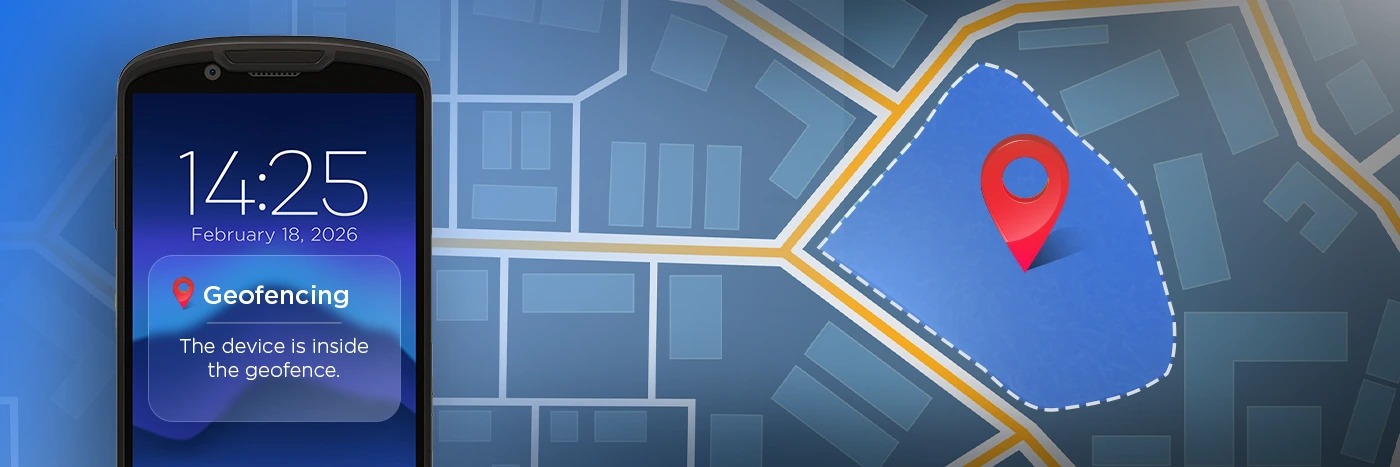
As technology grows, so does geofencing. It’s showing up more and more in everyday life. Still, many people aren’t sure what it means. When your mobile devices send you reminders or trigger actions based on your location, that’s geofencing.
In a business, geofencing can help keep mobile devices secure, track delivery and transportation vehicles, manage equipment, and meet compliance regulations. So, what is geofencing, how does it work and how can organizations use it?
In this blog, we’ll explore geofencing in more detail. Let’s get started!
Key Takeaways
-
Geofencing lets you create a custom, location-based boundary (“fence”) around an area.
-
The top benefits of geofencing include stronger security, smoother operations and better compliance.
-
It gives organizations a way to set and monitor virtual boundaries.
-
Costs depend on the coverage areas, features required, the number of devices and the how they are used.
What Is Geofencing? What Does It Mean?
Geofencing means setting up a custom, location-based boundary (or, “fence”) around an area, like a warehouse, an office or even a city block.
Geofences can be indoors or outdoors, any shape or size, and can track when a device enters, leaves or moves within the defined area.
What Is Geofencing Used For?
When geofencing is combined with a mobile device management (MDM) tool, organizations can allow or block certain device features when a device enters or leaves a set boundary.
Inside the geofence, users can access work apps, data and other features, such as the camera. Outside the geofence, those features can be locked automatically to prevent misuse. This helps reduce data breaches and blocks unauthorized access.
Real Examples of Geofencing for Enterprises
Geofencing has changed how large organizations do business. Here are a few examples:
-
Starting or stopping automated processes when materials move from one production zone to another.
-
Sending alerts if equipment or a device sits idle for too long.
-
Notifying teams if a truck goes off its planned route.
What Are the Benefits of Geofencing?
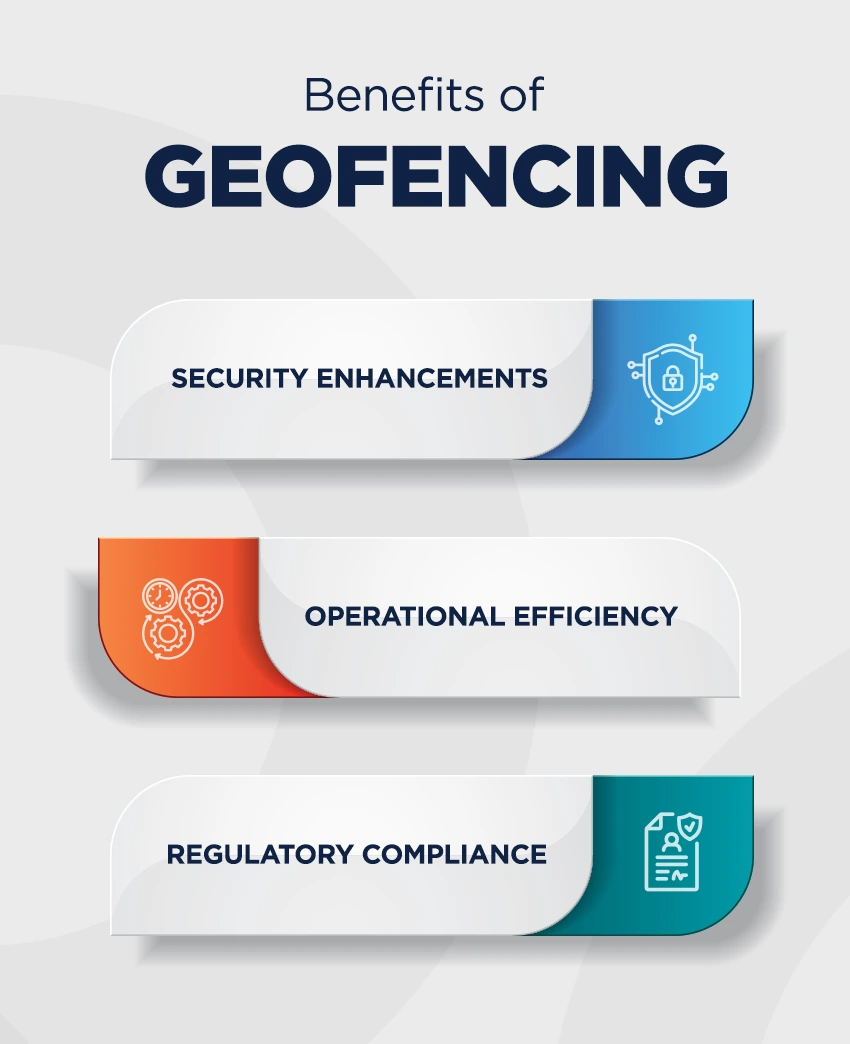
Here are three of the most important benefits to consider with geofencing:
1. Security Enhancements
Geofencing improves security in several ways. Organizations can send and receive real-time alerts when devices, equipment or vehicles leave designated areas. Additionally, devices that leave their specified location can be locked down so no one can use them.
2. Operational Efficiency
With the right tools, such as MDM, geofencing can help organizations improve operations and visibility. Organizations can track their assets to ensure they’re being used correctly and in the right place.
3. Regulatory Compliance
For organizations with compliance rules, geofencing can support automated data collection and logging. An automatic record can be created of where a device was when it enters or leaves a geofence. Geofencing can also help ensure employees stay within those specified safe zones, which lowers liability risks and reduces accidents.
How Does Geofencing Help Industries?
Given that geofencing helps organizations set and monitor virtual boundaries, it is useful for many industries:
-
Retail: sends location-based notifications, like sales, discounts or coupons, to customers (that have opted in) when they enter a store’s geofenced area. Organizations can also monitor company-owned devices and send alerts to ensure devices are not removed from specified areas.
-
Transportation & Logistics: monitors vehicles and assets and gets real-time alerts when vehicles enter or exit warehouses or delivery points.
-
Construction or Mining: alerts workers to hazardous zones. Organizations can also confirm attendance on job sites from defined work areas.
-
Healthcare: protects highly sensitive patient data on work devices, sends notifications on how to properly conduct tasks and ensures staff is clocking in during assigned shifts.
How Much Does Geofencing Cost?
Pricing varies based on:
-
Scale of deployment: Number of devices.
-
Technology used: GPS-only solutions are cheaper than multi-technology setups (GPS + Wi-Fi + RFID).
-
Software platform: Costs vary by provider. Some solutions are part of an MDM.
-
Maintenance and support: Ongoing monitoring, updates and support can add to the overall cost.
-
Purpose: Geofencing costs depend heavily on the intended use case – whether it’s for advertising or for security/IT.
For organizations with small or basic needs, MDM solutions with built-in geofencing generally cost around $2 to $6 per device per month. In contrast, medium or large enterprise deployments that require more advanced capabilities typically cost between $4 and $12 per device per month.
What’s The Difference Between GPS & Geofencing?
Global Positioning Systems (GPS) and geofencing might seem similar. However, while geofencing relies on GPS tracking systems, the opposite doesn’t apply.
GPS
Geofencing
-
GPS relies on satellites that orbit the Earth and transmit signals to receivers, like smartphones or car navigation systems. This allows the receiver (typically a device) to determine a precise position of latitude, longitude and altitude.
-
Geofencing uses a combination of GPS, radio frequency identification (RFID), Wi-Fi and/or cellular data technologies to create the “fences” or virtual boundaries discussed in this blog.
GPS
-
GPS relies on satellites that orbit the Earth and transmit signals to receivers, like smartphones or car navigation systems. This allows the receiver (typically a device) to determine a precise position of latitude, longitude and altitude.
Geofencing
-
Geofencing uses a combination of GPS, radio frequency identification (RFID), Wi-Fi and/or cellular data technologies to create the “fences” or virtual boundaries discussed in this blog.
Conclusion: Embrace Geofencing, Harness Actionable Insights
The global geofencing market is expected to grow to $13 billion USD by 2032 as more industries rely on location-based technology. As technology grows, geofencing will continue to help organizations work smarter and safer.
If you’d like to explore how geofencing can help your organization, book a demo today.